Choosing a stainless steel chef knife supplier is less about finding one perfect blade and more about matching steel, geometry, and finish to the price point your market actually buys at. For B2B buyers, the specification sheet is the product. Here is a practical checklist covering what to specify, what drives cost, and how to plan a production timeline.
Start With Steel Grade and Hardness
The steel grade sets the ceiling for everything else.
Target hardness typically sits between 52 and 58 HRC. Softer steel sharpens easily and resists chipping; harder steel holds an edge longer but demands tighter heat treatment control. Ask your supplier what hardness range they actually hold in production, not just what a datasheet claims.
Blade Construction, Handle, and Finish
Most chef knives are either stamped from sheet steel or forged from bar stock. Forged blades usually carry a bolster and a heavier feel in the hand; stamped blades allow thinner geometry and a lower unit cost. Specify tang type (full tang, half tang, or hidden tang), blade thickness (2.0-2.5 mm is common for a 20 cm chef knife), and edge angle.
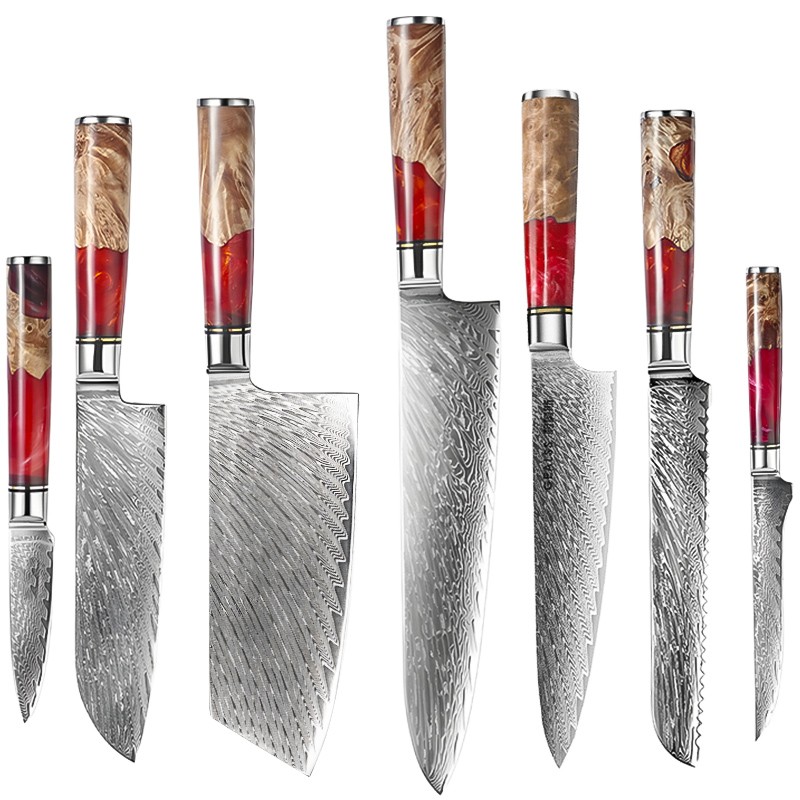
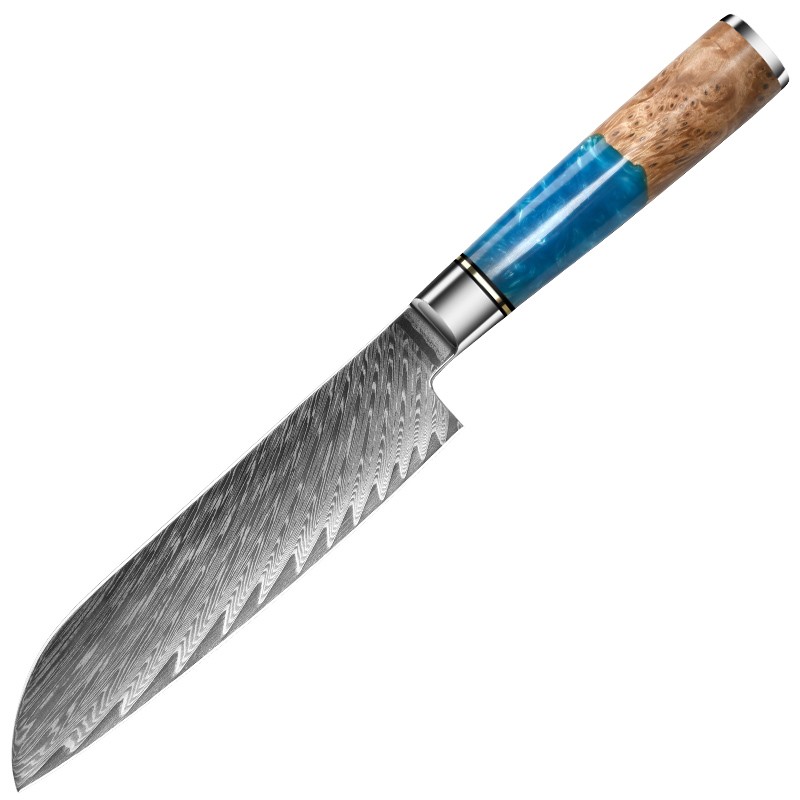
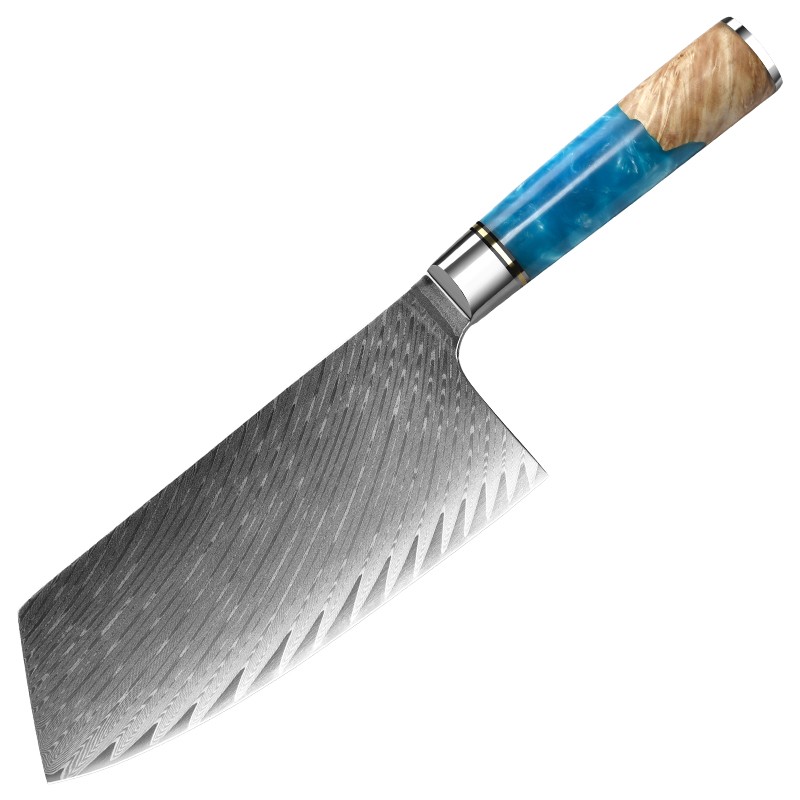
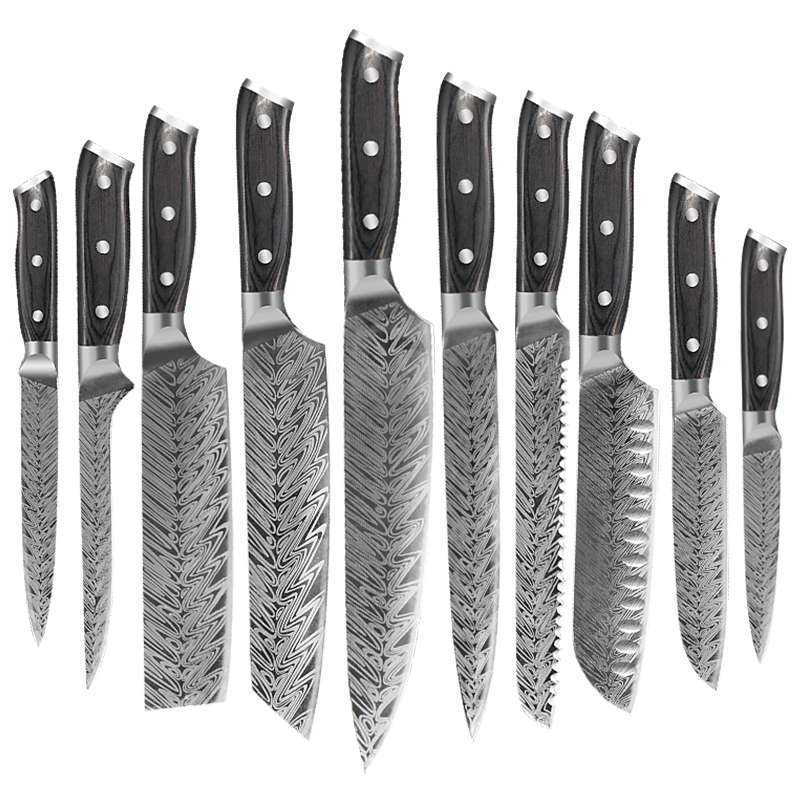
Handles are where a product line differentiates. Common options include Pakkawood, ABS, micarta, natural wood, and G10. Each carries a different cost and durability profile, and each affects how the knife feels in the hand and how it survives real kitchen use.
Finish matters too: mirror polish, satin, brushed, or a Damascus etch. This is also where quality control becomes visible. A consistent grind line and clean rivet seating are what a buyer notices before reading a single spec.
MOQ, Lead Time, and What to Confirm First
MOQ is not a fixed number. It is driven by blade steel (some grades carry minimum mill quantities), whether new tooling or molds are required, the handle material, and the packaging format. A project that reuses existing tooling and standard materials will always start lower than a fully custom design.
Lead time works the same way. Sampling comes first, then tooling, then production and finishing. Before committing, confirm the sample approval process, the inspection standard, and who owns the tooling at the end.
Zenttop has manufactured kitchen knives in Yangjiang for over 18 years, operating a 40,000 m2 factory with a daily capacity of 50,000 pieces. We are BSCI and ISO9001 certified and work as an OEM/ODM partner from first sample through shipment.
Next Step
Send your target market, price point, and preferred steel grade to inquiry@zenttop.com. We will reply with realistic material options, MOQ, and lead time for your project.